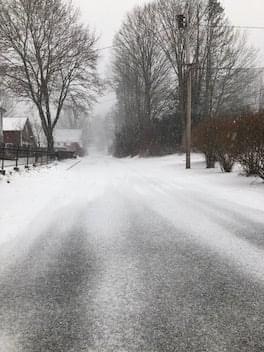
On Friday night we had our second snowstorm, about five inches of powder due to the frigid temps, which made for easy shoveling. As I cleared walkways and the deck, I thought of how I’ve used winter and its weather in several of my books.
Most of what I write is set in the fictional hilltowns of Western Massachusetts, because I am inspired by my experiences living in the real ones. Think long winters, snowy roads, heating with wood, driving in it, thaws, brutal cold, chores that don’t stop because of the cold, oh, the list goes on.
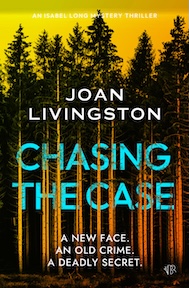
As I’ve written before, I like to take what I know and have my way with it. Chasing the Case, the first in my Isabel Long Mystery Series, begins with a snowy scene in which Isabel Long buries a beloved cat in the backyard. In another scene she reflects on winter after leaving the town’s only bar.
I back the car carefully to avoid hitting any fool rushing to get inside. The snow melted the other day, but I can feel there’s no turning back to any real warm weather until spring, and even that might take a while. What’s that old joke? There are two seasons in Conwell: winter and the Fourth of July. The first time I heard it, from a local, of course, I laughed. Now I say it to visitors and newcomers to make them laugh.
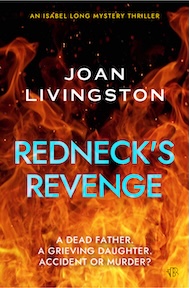
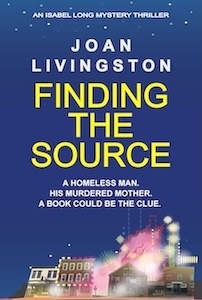
Winter has a significant role in Chasing the Case, but also the second, Redneck’s Revenge, and the eighth, Finding the Source. Among them are snowy chase scenes on foot and in a car after Isabel discovers who is responsible for the murders she is investigating. I enjoy throwing a bit of danger her way. Wintry weather is a big help with that.
The Swanson Shuffle is one of the few books I’ve written that is not set in the hilltowns, but in an old mill town. The state, which is closing its mental hospitals, hires inexperienced staff like Bia Fernandes to help ex-patients make the transition in so-called halfway houses. In this case, the house is a cold, funky mansion that will be torn down when a highway is built. Here, Bia and Paul, another staff member, are at a meeting inside Alden State Hospital.

The radiators at the hospital’s auditorium steam and knock. The snowflakes falling outside the hospital auditorium’s windows are small and fast, which likely means we’re in for a deep snow. Paul eyes me when I make a soft groan. He nods. We are sick of winter. One week two weeks ago, it snowed every day, and we had to push everybody’s cars down the driveway, so they could get to work on time.
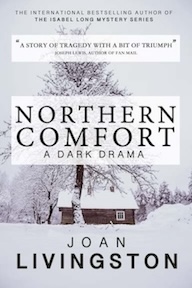
Of all the books I’ve written, the one most entrenched in winter is Northern Comfort. Willi Miller and her young son are a charity case in a small town that holds dear to the traditions of making maple syrup, playing old-time music, and keeping family secrets. Willi does her best for her young son Cody, who was brain-damaged at birth. This first chapter is appropriately called Worst of Winter. Will is hanging wet laundry on a clothesline, but the chore is interrupted because Cody wants her to tow him in his sled.
Round and round Willi towed her son. She slipped on the packed ring of snow, and her straight, yellow hair dropped to her jaw when her knit cap fell. Cody’s head rocked back as he yelped in pleasure. After a while, she stopped, out of breath.
“I gotta finish hanging the clothes before it gets dark. Alright?” she told Cody although she did not expect his answer.
She picked her hat from the snow. The sun was low in the sky, and the dark smudge spreading from the west likely carried more snow. Willi frowned. It would be too much trouble to take the clothes down again. She hated this part of winter, mid-January. It snowed every day, not much, but enough to keep the road crews going with their plowsand sanders. Winter always has a week like this, unsettled weather, the worst of the season, of the year, as far as she was concerned. Often, it happened after the thaw, so that brief warm spell seemed like one cruel joke.
She bent for one of Cody’s shirts. She had to work faster because the clothes were stiffening inside the basket. After she hung them, they would freeze into thin slabs, like shale, and after a day or two, they’ll be dry. If she hadany money, she would buy a dryer. She glanced toward her house and saw missing clapboards. She’d fix those, too.
When she was a girl, she used to keep a mental list of what she’d get if she were rich: stuff like pink high heels and a long white coat. None of them seemed practical for a town like Hayward, where half the roads were dirt and fancy things were in other people’s houses. Now she would buy a car that worked without worry and hire a lawyerto make her ex-husband, Junior, pay child support.
Her boy bucked his body while he lay on his belly inside the sled, wailing as if he were wounded. Willi shook her hands and grabbed a pair of jeans from the basket.
“Shit, I hate this life,” she said.
Feel like immersing yourself further in winter? Here are the links to buy Chasing the Case, Redneck’s Revenge, Finding the Source, The Swanson Shuffle, and Northern Comfort. Thank you if you do.