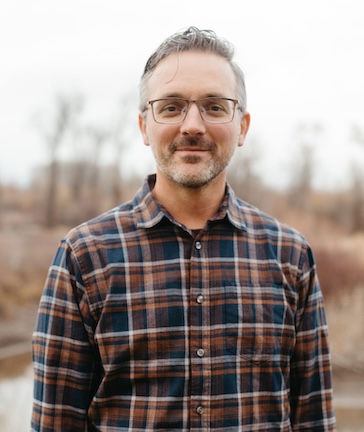
From time to time, I run a 6Ws feature to give fellow authors and their books a bit of promotion. Arthur Lee is next. (With a nod to my former life as a journalist, I opted for the 6Ws of the business: who, what, when, where, why and how, which counts as it ends in W.) I will let Arthur tell you about his writing, specifically about his debut book, Thin Places: Portraits, Prayers, and Liminal Grace. By the way this post is part of the Bittersweet Book Tour.
Who are you?
That is the universal question, isn’t it? I feel like I’ve been trying to figure that out since kindergarten. I’m still trying to figure that out, right? We’re presented, every day, with new experiences—some easy, others hard—but all of these experiences, they affect us, teach us, change us. We are always learning, growing, evolving. So, in that sense, because I’m always becoming someone new, the goal to know who I am is always just beyond my reach. But it keeps me stretching. Until, one day, I guess in my obituary, when someone looks back and asks, ‘who was he?’ I hope, then, there will be a lot of good things to say about who I became and what good I did with what I was given.
But as far as my life sketch goes, I came into the world at the end of the 70s. I like to say like a sprig of cilantro atop an already well-seasoned chili, which is just to say I was a regular kid like everyone else, but I’ve been doing my best to add a little flavor to the pot.
I grew up outside of Seattle with a brother and three sisters. We lived in a really small house—800 square feet for seven us. And only one bathroom which was a real trial when it’s the 80s and you have sisters who need the mirror in front of which to do their big hair and bright makeup. We were pretty poor, to be honest, but I didn’t notice. I only recognized that with hindsight. We spent a lot of time doing stuff together as a family. Music, singing, art, theater, movies, writing, storytelling, sports—all these things played prominent roles in our lives. My brother and I would spend hours making up stories, filming movies with old filmless cameras, and putting on plays.
As for my current life, I like to say too that I’ve been lucky in business but luckier in love. I was married for twenty years and then I wasn’t. That left us all reeling. I have four amazing boys. And it was tough on them, to say the least. Since I was full-time Dad after the divorce, I ended up selling my business. That allowed me to be at home with them. Consequently, it also allowed me to start writing again. And here we are. My boys are doing great. This book is making its way into the world. And—drumroll, please—I found love again. Renee and I just celebrated our two-year anniversary. So now, I am Dad to four and stepdad to three.
What is your latest book?
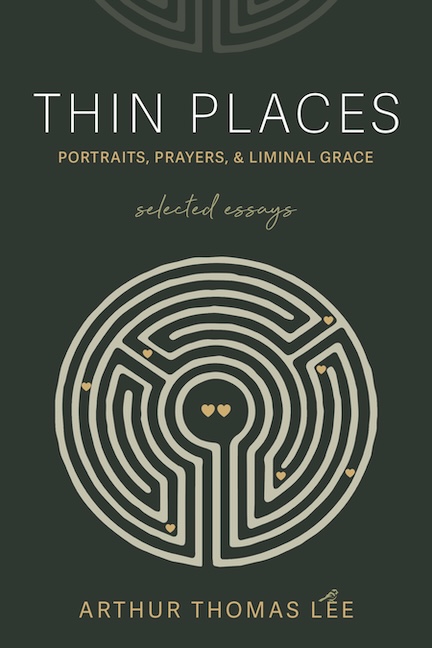
My debut book, traditionally published by Plain Sight Publishing (the nonfiction Imprint of Cedar Fort), is called Thin Places: Portraits, Prayers, and Liminal Grace. At its core, it is about stories. I believe in the saving-power of stories. I believe too that everyone has a story to tell. More than that, I believe everyone is a story, an incredible story worth reading. Sometimes we get those stories through their words; other times though, lots of times actually, we only get those stories and any associated themes by reading between the lines in their faces.
To that end, this book, is about reading between the lines. It is about finding strength and hope and love and peace and healing and commonality in the little moments of our lives, the liminal moments that we think would not be of interest to anyone else or have no lasting value. And we think that, or we shy away from sharing certain chapters in our lives, because they speak of times full of heavy, hurt, heartache, or hard. This book, though, shows that even in dark times, there can be something powerful and beautiful and enlightening. Here is a little something I initially wrote about that idea and the book itself.
The Celts called them “thin places.” It was their way of saying that heaven, in a particular moment or at a certain location, was close, that the veil between time and eternity was shrinking or had shrunk already. Or maybe it was never there to begin with. And what of those “thin faces,” those deeply etched guises fighting for light in the thick of understory, from whose eyes grace springs and from whose lips prayers rise like clarion calls for deeper connection, understanding, and love? So too, so too. So many scars. So many stories to tell. So many strangers yet to take in.
Consisting of seventy short essays and seventy interstitial poems, Thin Places: Portraits, Prayers, and Liminal Grace is a collection of interconnected stories from and about everyday people. Part essay collection, part memoir, part spiritual reflection, each essay is a portrait (of someone or some situation), a prayer (a wish for better or call to action for greater understanding and love), and an example of grace in the face of heavy, hurt, heartache, and hard. Because it takes darkness to see the stars, yes, but that is not the only purpose of darkness; the darkness can be beautiful too.
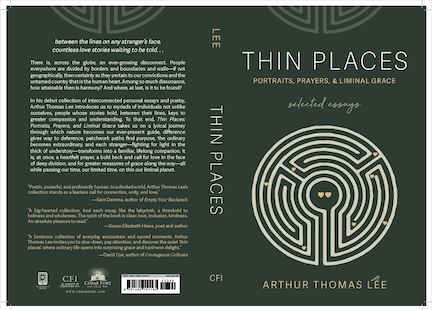
And here is the official back cover description:
between the lines on any stranger’s face,
countless love stories needing to be told…
There is, across the globe, an ever-growing disconnect. People everywhere are divided by borders and boundaries and walls—if not geographically, then certainly as they pertain to our convictions and the untamed country that is the human heart. Among so much dissonance, how attainable then is harmony? And where, at last, is it to be found?
In his debut collection of interconnected personal essays and poetry, Arthur Thomas Lee introduces us to myriads of individuals not unlike ourselves, people whose stories hold, between their lines, keys to greater compassion and understanding. To that end, Thin Places: Portraits, Prayers, and Liminal Grace takes us on a lyrical journey through which nature becomes our ever-present guide, difference gives way to deference, patchwork paths find purpose, the ordinary becomes extraordinary, and each stranger—fighting for light in the thick of understory—transforms into familiar lifelong companion. It is, at once, a heart-felt prayer, a bold beck and call for love in the face of deep division, and for greater measures of grace along the way—all while passing our time, our limited time, on this our liminal planet.
When did you begin writing?
I loved writing stories, almost from the very beginning. In the first grade, I wrote a story called “The Rainbow Goes to Japan.” It was all of one page. But my teacher selected it to go to this Young Author’s Conference where you got to meet authors and read your story before an audience. So I went, and I was hooked from that point forward. After that, I participated in Young Authors’ Conference several times.
That was the start, honestly. It came from a teacher’s encouragement. From there, my writing journey unfolded a bit like a labyrinth, full of turns and changes in direction, in and out of a lot of different genres. In junior high, I wrote stories to get laughs. In high school, I turned to poetry–out of necessity really, all this longing and unrequited love, you know? In college, I was inexplicably drawn to writing movie scripts, and I wrote several in my spare time. Then after my kids were born, I turned to kids’ books and wrote several MG/YA novels, adventure stuff, more like Roald Dahl. I even self-published one called Partners Again. It did alright. I lost money in the end, but it did create a lot of opportunities to go into schools and put on workshops and teach creative writing. I loved that.
But then I stopped writing for a while to focus on my family and provide for them. I dabbled in things here and there, but it wasn’t until I went back to college in my 30s that I felt this rekindling desire to write, specifically poetry at that time. I had some professors who inspired me along those lines. I was lucky enough to have a couple poems published right out of college.
Before the divorce, I started working on a collection of essays about love. But after the divorce, I couldn’t bring myself to continue. So, I stopped for a while. I just couldn’t find the desire…or my voice. I didn’t know what I wanted to write about. But I eventually picked up the pen again, so to speak. Out of necessity, to work through what I had been through and to heal. Writing, at that time, was very therapeutic for me and through it, I found the strength to forgive and move on. And that, in turn, when the time was right, is what led me to writing these essays, which, by the way, are also about love but in a deeper, more universal sense.
So, in a strange way, I feel like every genre that ever called to me came together to help me write these portraits in the way they needed to be written, at the moment they needed to be written. Writing them, even when the subject matter was hard, gave me a lot of hope. They helped me see others and not just judge them. They also helped me heal. I think we can all use a little more of that in this day and age. So, that is my hope for these stories. I really do believe in the saving power of stories. Is that too much to ask for?
How do you write?
I write as fast as I can. When an idea hits me, I try to sit down as soon as possible and capture the idea, but especially the feeling behind it. Ideally in that very moment, or that same day, but if not, then the next day for sure, before it leaves me. Because writing is so much more than capturing plot points. It really is about feeling. And if you feel deeply when you write, I believe it will then be easier for the reader to feel something too. Right?
There’s this really cool transaction that can happen across time and space when we write from a place of deep feeling. I’ve found, for me, that if I don’t get to an idea right away, I run the risk of only remembering the specifics I wanted to include, all while the initial feeling, or essence of the piece, altogether escapes my memory. I’ve had that happen a few times, and all I can do is sit there and wonder what might have been.
What you feel about a piece before it’s written is, I think, very akin to a spiritual creation that precedes the physical. You’ve got to map out the soul of the piece first, then you can more readily see what it is to become and accordingly add flesh and bones and look at it after it is all done and say it is good. And it will be good, whether anything comes of it or not, because you were true to the feeling and you got it down on paper (this garden of words from which a lot of things can grow) and it is a piece of you: this is now bone of my bones and flesh of my flesh. Better yet: this is now heart of my heart. That’s, for me, is what writing is all about.
Where do you write?
I write wherever I can. It depends on the stage of writing. I believe everyone has a story, everyone is a story, and if we listen, we will find that those stories are constantly trying to tell themselves. Everyone, everything wants, even needs, to tell their story. This is especially true of nature, I believe. Nature is constantly trying to teach us something. Or make us feel something.
So when I hear a story; or get an idea; or feel some bit of inspiration; or craft a particular line; or have flash before my senses a particular thing while out in the woods, or in the desert, or along the beach, or by the river, or in the midst of a throng of people, I have to write it down immediately, on whatever I have closest to me: sticky note, phone, pad of paper, the back of a bill, on my hand, in a writing journal, you name it. But usually, now, on the notes app of my phone. And then when it comes time to really flesh it out and connect those ideas or images or stories together, I sit down in front of my computer, at my desk, by my window where I can look upon nature, and go to town.
Why do you write?
I think the answer to this has changed over the years. When I was little, I wrote–simply put–because I discovered inside a story to tell; and in writing it down, I learned that I loved writing and that I was good enough at it and that people liked what I wrote and it caused them joy which, in turn, caused me joy. That speaks to the innocence and essence of childhood, I think. It is all about love and joy.
But then, as we get older, we lose sight of that a little. Life and ambition can get in the way and muddy the waters a bit. That, I think, was true for me. Not in a bad way, mind you; it’s just that as I got older, somewhere I crossed this line, and I started writing with fame as my goal instead of joy.
I had this dream of being a writer, of being discovered, and seeing my book at a bookstore, and becoming famous, and all the things that are associated with that. And that’s not bad, but I did lose sight of the core part of what turned me on to writing in the first place.
David Brooks, in his book The Second Mountain, talks about this idea that we all have a calling in life, or an annunciation moment, he calls it, where we feel drawn to something specific very early in our life. You could call it a natural gift, but certainly something that speaks to us and through which we have an opportunity to speak to others. But then we lose sight of that call, he says, and it is often only after life has knocked us around a bit that we get a second annunciation moment, calling us again (if we are listening) to do the thing we alone were meant to do.
I think that was true for me again. I don’t mean that in an egotistical way. It’s just that very early on, I felt the call to write. I was drawn to it, maybe it was drawn to me. I don’t know. I just know that I loved it and it brought me joy. But then life, as it unfolded, hindered that a bit, which is okay. I wasn’t quite ready to write for the right reasons anyway. I needed more life under my belt in order to write more powerfully.
Life, though, did knock me around a bit. Strangely, during those hard times, the last thing I wanted to do was write. I couldn’t find the desire because I suddenly didn’t know who I was or why I was. But after the dust settled, it started to become clearer, and I did feel again the call and desire to write. Not only that, I needed to write.
This is a really long-winded answer, I know, but that makes me think of something Anthony Hopkins said about prayer in the movie Shadowlands when portraying C.S. Lewis. He said, “I pray because I can’t help myself. I pray because I’m helpless. I pray because the need flows out of me all the time, waking and sleeping. It doesn’t change God. It changes me.”
I feel similarly about writing. I write because I can’t help myself anymore; I’m helpless and always in the midst of struggle or surrounded by people struggling, and the need flows out of me, and when done honestly, it changes me.
Also, what helped, I think: I stopped caring about getting published or achieving fame. What does that word mean anyway?
Martin Luther King said, and I’m paraphrasing, ‘everyone has the opportunity for greatness, not fame, but greatness, because greatness is determined by service.’. I only care about being great, in that sense. I want my writing to be serviceable, meaning I hope deep down that it will resonate with people deep down. I want it to serve a bigger cause and effect change–for good.
Writing is a holy act. It is, I believe, an act of prayer, and prayer is an act of writing too. We take something very personal, a feeling, a need, and we put words to it, and then we send it out into the universe, hoping for some kind of transaction, and that process, it changes us. And if we’re lucky, it helps others change others too.
Why Essays?
Every genre is a vehicle, capable of taking us on an incredible journey. Those journeys can be long and winding, as is the case with epic fantasy, or they can be short and spontaneous, as is the case with poetry. And then a lot in between. I’ve dabbled in a lot of different genres, and one day I want to return to writing fiction, but right now—non-fiction (essays, specifically) is the vehicle that resonates with me most, and so I find myself drawn to writing it too.
I love writing poetry, the tightness and the mystery and the musicality of it, but I found myself wanting to go even deeper, not as deep as fiction, but just a little more. But I also didn’t want to lose the tightness and cadence of poetry. So, I kind of think of each essay as a prose poem.
At the same time, in an industry where everyone is trying to come up with that new amazing story idea, I’ve found that those stories already exist, all around us; they are rubbing shoulders with us everywhere we go; and they are, at once, romantic and heroic and tragic and inspiring and hopeful and on and on. And I want to capture as many of them as possible, so I can learn from the people around me and become a better human being because of them. And hopefully, by telling these stories, I can help others do the same. Writing, at its core, is an instrument for understanding and, in turn, empathy.
ENDORSEMENT BLURB
“Poetic, powerful, and profoundly human. In a divided world, Arthur Thomas Lee’s collection stands as a fearless call for connection, unity, and love.” — Sam Demma, Author of Empty Your Backpack
“A luminous collection of everyday encounters and sacred moments, Arthur Thomas Lee invites you to slow down, pay attention, and discover the quiet ‘thin places’ where ordinary life opens into surprising grace and hard-won delight.” — David Dye, Author of Courageous Cultures
“A big-hearted collection. And each essay, like the labyrinth, a threshold to holiness and wholeness. The spirit of the book is clear: love, inclusion, kindness. An absolute pleasure to read.” — Susan Elizabeth Howe, Poet, Author of Penitential Cries
LINKS TO BUY:
Print:
Amazon: https://a.co/d/023eBTpZ
B&N: barnesandnoble.com/w/thin-places-arthur-lee/1150081408?ean=9781462151165
Walmart: https://www.walmart.com/ip/Thin-Places-Paperback-9781462151165/20155962013
Target: https://www.target.com/p/thin-places-by-arthur-lee-paperback/-/A-1011936062
Books A Million: https://www.booksamillion.com/p/Thin-Places/Arthur-Thomas-Lee/9781462151165
eBook:
Amazon: https://www.amazon.com/Thin-Places-Portraits-Prayers-Liminal-ebook/dp/B0H5T7C6MK/
Kobo: https://www.kobo.com/us/en/ebook/thin-places-portraits-prayers-liminal-grace
eBooks2Go: https://www.ebooks2go.com/spirituality/thin-places-portraits-prayers-liminal-grace
Audiobook: Coming Soon to Audible, Spotify, etc.
WEBSITE AND SOCIAL MEDIA LINKS:
https://www.instagram.com/arthurthomaslee